Project 2025 erases freedoms for future generations.
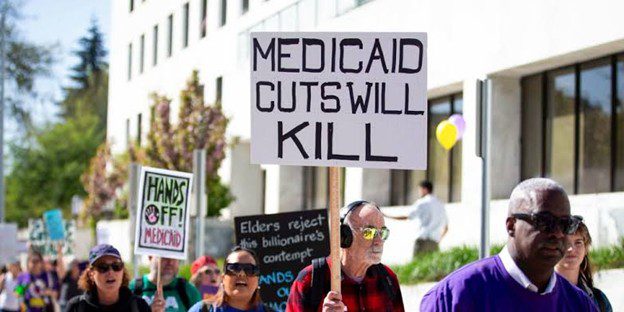
The Project 2025 platform promises to cut Medicaid, Medicare, Social Security, and Veteran’s benefits, leaving millions uninsured and unprotected. The Republican House has already forwarded the budget to the Senate, where if passed on average of 25% of citizens in red states will loose health coverage. Many will die needlessly.
A Nation on the Brink
Other horrors await us if we do not act. Birth control bans obliterate women’s rights. The SAVE Act disenfranchises 67 million women’s voting rights. Even after the loss of suffrage, can elections be fair with Musk buying votes and reprogramming the voting machines? Then there is the loss of integrity once Trump seizes the US Postal Service.
Worker rights are next. Repelling OSHA renders all labor occupational slavery to the oligarchs.
The Devolution of American Public Policy
Authored By: Ike Wilson
In 1994, a political seismic shift occurred in the United States. Newt Gingrich, then the Republican Minority Whip, spearheaded a platform called the “Contract with America”—a policy agenda that aimed to reshape the nation’s political and economic landscape.
Contract with America | Republican ...
This contract represented a conservative blueprint that promised to return America to fiscal responsibility, shrink the federal government, and empower individuals over bureaucracies. While these promises resonated with many voters, the long-term impacts of this agenda, along with subsequent policy shifts, have contributed to a drift away from social democratic values towards an era of oligarchic governance.
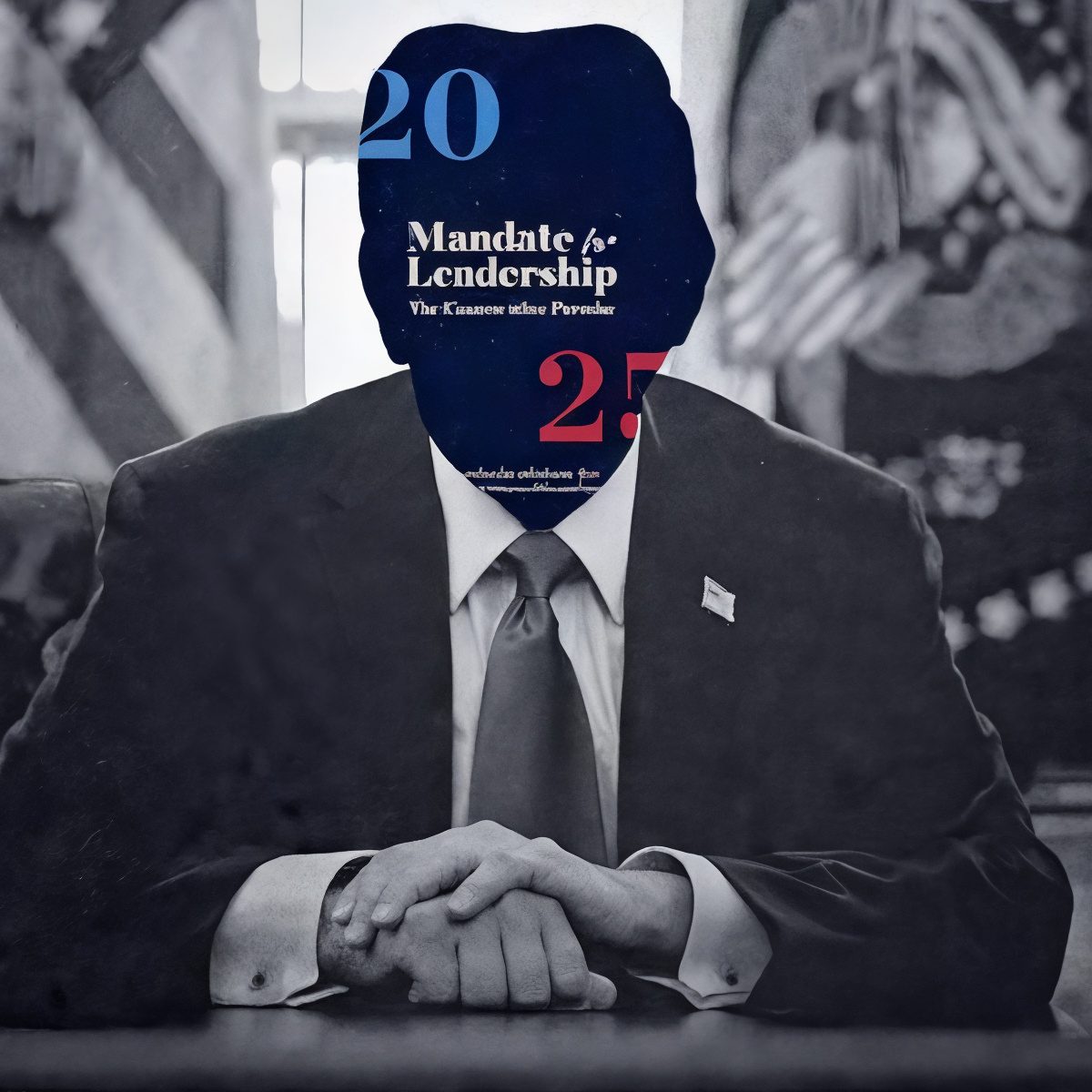
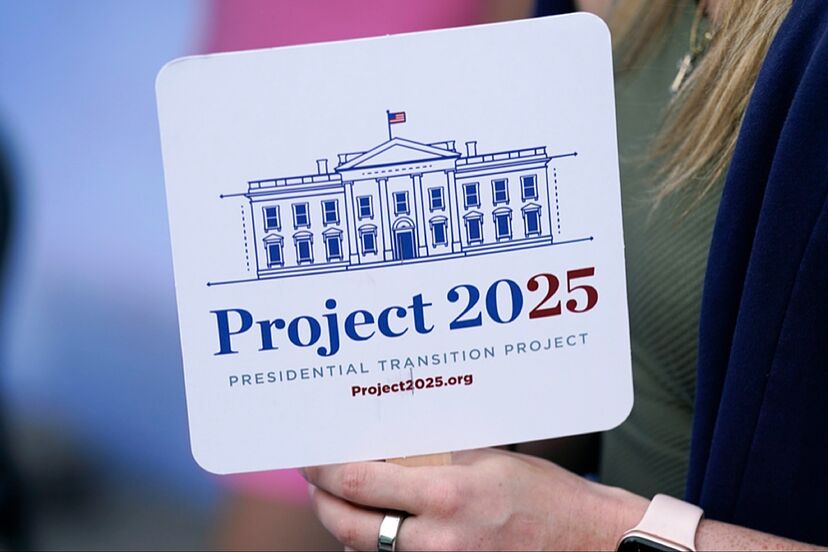
Fast-forward nearly three decades, and the Gingrich Doctrine has found a new iteration in Project 2025, a conservative roadmap that seeks to embed a similarly radical transformation of American society.
This essay critically appraises how public policies, once rooted in social democratic ideals, have progressively devolved toward oligarchic structures—favoring concentrated wealth and power over equitable public good. Along the way, the rise of the Tea Party, Occupy Wall Street, and the Citizens United ruling set the stage for the current political moment, as immigration policy emerges as both a flashpoint and a tool for consolidating power.
The "Contract with America": Ideals and Consequences
The 1994 Republican Revolution, orchestrated by Gingrich and embodied by the Contract with America, marked a significant turning point in American governance. At its core, the contract advocated for reduced government spending, welfare reform, and a balanced budget. It called for more private-sector involvement and placed a firm belief in market-driven solutions over government programs, effectively shifting the philosophical ground on which U.S. public policy stood.
The Contract with America was a decisive move toward reducing the role of government in social programs and dismantling the post-New Deal consensus that had supported a robust middle class. Welfare reform, for instance, was lauded as an effort to reduce dependency on government, but its long-term impact was more punitive, pushing many vulnerable Americans into poverty without providing adequate paths toward self-sufficiency. This framework would set the stage for the emergence of oligarchic rule—where public policy increasingly served the interests of the wealthy.
Tea Party and Occupy Wall Street: A Tale of Two Movements
In the wake of the 2008 financial crisis, two major grassroots movements—the Tea Party and Occupy Wall Street—emerged, each responding to perceived failures of the system from opposite ends of the political spectrum. Both movements were, in a sense, reactions to the economic inequality and elite-driven governance that had become entrenched in the post-Gingrich era.
The Tea Party:
The Tea Party Changed American ...
Born in 2009 out of opposition to the Obama administration’s policies, including the Affordable Care Act, the Tea Party demanded smaller government, lower taxes, and less regulation. They decried bailouts for banks and other industries, casting the federal government as overreaching and oppressive.
Though nominally grassroots, the Tea Party was heavily funded by corporate interests like the Koch brothers, revealing a deeper agenda of oligarchic capture disguised as populism. Over time, this movement gave birth to the more extreme forms of conservatism that led to Trumpism and the MAGA agenda. The populist rhetoric of these groups masked their alignment with policies that favored the ultra-wealthy, further entrenching corporate influence in politics.
Occupy Wall Street:
Occupy Wall Street Protesters
On the other end of the spectrum, Occupy Wall Street, which emerged in 2011, sought to bring attention to the growing wealth gap and the unchecked power of corporations and Wall Street. Their rallying cry—“We are the 99%”—highlighted the growing divide between the economic elite and the rest of the population.
Occupy’s critique was rooted in a rejection of the very policies that the Gingrich-era Republicans and later the Tea Party embraced. While Occupy Wall Street failed to achieve sustained policy influence, its messaging laid the groundwork for a broader critique of inequality and oligarchic control in American politics.
Both movements reflected the bipolar reality of American politics—a country deeply divided but reacting to the same underlying force: the concentration of wealth and power. These movements' trajectories culminated in the 2016 election, where Donald Trump, with Tea Party roots and anti-elitist rhetoric, was swept into power on a populist wave, while the economic inequality decried by Occupy continued to expand.
Citizens United: The Formalization of Oligarchic Control
If the Tea Party and Occupy were grassroots reactions to inequality, the 2010 Citizens United v. FEC Supreme Court decision was a legal codification of the shift toward oligarchy. The ruling allowed unlimited corporate spending in elections, claiming that restrictions on such spending violated the First Amendment right to free speech.
The Implications of Citizens United:
This decision accelerated the corporatization of American politics, giving unprecedented power to wealthy donors, corporations, and political action committees (PACs). It allowed a small group of wealthy individuals and organizations to wield outsized influence over elections and policymaking.
With campaign finance laws gutted, elections became battlegrounds for corporate and billionaire interests, furthering the gap between average voters and those with economic power. This helped entrench policies that disproportionately favored the wealthiest Americans—tax cuts for corporations, deregulation, and the rollback of labor protections—while the interests of the working and middle class became secondary.
Citizens United’s influence is perhaps most visible in the rise of Super PACs, which can raise and spend unlimited sums of money to support or oppose political candidates. This ruling opened the door for Project 2025, where conservative think tanks and billionaire donors are mapping out an agenda that, while cloaked in populist language, would further centralize power and wealth in the hands of a few.
Immigration Policy: A New Frontier for Oligarchic Control
The evolution of immigration policy since the 1990s also reveals a shift toward authoritarianism and oligarchic interests. In both the Contract with America and Project 2025, immigration is portrayed as an economic and security threat, rather than as a vital component of America’s social fabric and labor market.
Contract with America’s Immigration Stance:
The Contract with America prioritized border security and proposed measures to curb illegal immigration. The underlying sentiment was that immigrants, particularly those from Latin America, were a threat to American jobs and economic security. These ideas took root in the Trump administration's policies, culminating in harsh measures like the "Muslim Ban", family separations, and the prioritization of building a border wall.
Project 2025 and the Future of Immigration:
Project 2025 | Definition, Heritage ...
Project 2025 continues this trajectory by proposing a more draconian set of immigration policies. This includes plans for further militarizing the southern border, increasing deportations, and restricting pathways to citizenship. The justification is often national security, but the deeper agenda is to maintain an oligarchic economic structure where cheap, exploitable labor is available but denied political rights.
These policies allow corporate elites to benefit from a marginalized workforce, while stirring populist resentment among voters who believe immigrants are the cause of economic hardship, despite evidence showing that immigration boosts the economy.
From Social Democracy to Oligarchy: A Systematic Deconstruction
The shift from social democracy to oligarchic governance is neither accidental nor new. Policies that once supported broad-based prosperity—such as the New Deal or Great Society programs—have been systematically dismantled. The rise of Trumpism and Project 2025 represent the consolidation of this drift, where the interests of wealthy elites are increasingly prioritized over the needs of the broader population.
The Tea Party, Occupy Wall Street, Citizens United, and immigration policy all reflect the underlying dynamic that drives this transformation: a concentrated effort by the wealthiest Americans to shape public policy in their favor, often at the expense of working-class and middle-class Americans.
What is ironic, and frankly shocking, is the paradox that has emerged in recent years: poor and working-class Americans, particularly in rural areas and Rust Belt states, have increasingly trended toward supporting these very oligarchic forces. From their enthusiastic embrace of the Tea Party to their fervent loyalty to Trumpism and MAGA, millions have effectively begun voting against their own long-term economic interests. This raises a profound question: Why do those who stand to benefit most from social democratic policies support political movements that advocate for deregulation, tax cuts for the wealthy, and privatization?
One answer lies in the emotional and cultural appeal that these movements wield. The Tea Party, and later Trumpism, masterfully harnessed negative, grievance-based populist rhetoric that tapped into feelings of disenfranchisement, economic anxiety, and anti-elite sentiment. By positioning themselves as rebels against coastal elites, the GOP managed to capture the resentment of many working-class voters, particularly white voters who felt left behind by globalization and technological change.
But this appeal is underpinned by a paradox. While MAGA presents itself as a champion of the forgotten man, its policies overwhelmingly benefit the corporate elite, evidenced by massive tax cuts for corporations, the deregulation of industries, and a dismantling of the very welfare programs that provide support to working-class Americans. What is at play here is not just a political realignment but a psychological one—a narrative shift that transforms economic grievances into cultural grievances.
This is where the Citizens United ruling becomes crucial: by unleashing unlimited corporate spending in politics, it allowed wealthy donors to flood the airwaves with messaging that frames cultural issues (like immigration or race relations) as more pressing than economic policies.
By driving wedge issues to the forefront of political discourse, the oligarchic agenda effectively sidesteps the real economic struggles of the working class, directing their frustrations away from policies that further enrich the elite and toward issues that stoke fear and division.
This paradox of voting against self-interest is an enduring theme in modern American politics, one that underscores the complexity of identity, perception, and economic policy in today’s political landscape.
Conclusion: Reclaiming Public Policy for the Public Good
The evolution from the Contract with America to Project 2025 is a clear trajectory—one that favors oligarchic rule over democratic governance. The drift from policies that once supported a broad middle class to those that concentrate wealth in the hands of the few is dangerous, not only for the health of the economy but also for the future of democracy itself.
As the U.S. approaches this critical juncture, the challenge will be to reverse course and rebuild a political system that prioritizes the public good over private interests. Only then can we hope to stem the tide of oligarchy and restore the social democratic principles that once defined American progress.